 Social Liberty
That Queyntyly Engynours Made
Engine once meant wit, an engineer was anyone who used it, and ingenuous and ingenious were two faces of a single birth. Words shrink to fit the institutions that use them. Some are worth taking back for the people.
Click to enlarge
Around 1300 an English poet put Richard the Lionheart on crusade in rhyming couplets. In Richard Coer de Lyon the king’s army raises a siege tower, and the poem says of it: “A tour ful strong, That queyntyly engynours made.” It is among the first places the word engineer turns up in English. The people it names built and worked the engines of war: towers, rams, and the throwing machines that broke walls at Acre.
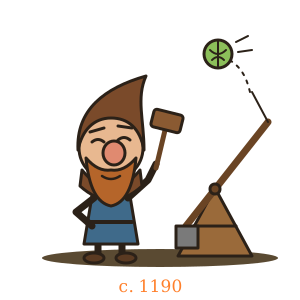 Both of the line’s odd words have narrowed since. Queyntyly meant cunningly, with skill, from the same root as cognitus, known. Something queynte was cleverly made, elaborate, a little strange. Six centuries later quaint means a tea shop with lace curtains. Engynour went the other way, from a man with a talent to a man with a license, but it shrank just the same.
A word in common use rarely keeps its full range. It settles into whatever corner of its meaning the society around it needs most often, and the rest falls away until it sounds archaic or wrong. What gets lost is usually the wider sense, the one that belonged to everybody.
Engine
Engine comes from the Latin ingenium: what is born in, native quality, wit, talent. The parts are in and gignere, to beget. Old French made it engin, which covered skill, cleverness, a trick, a snare, and a machine of war. When English took it up around 1300, an engine could be any of those. A man of good engine was a man of good wit.
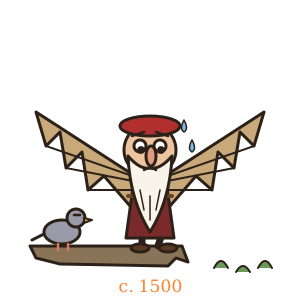 The device took over the word because a device was easier to point at than a faculty. A catapult is the visible remainder of somebody’s cleverness, and people named the remainder after its source. Then the range of devices narrowed too. By the time of Watt, an engine was a machine that turned heat into motion, and later one that burned fuel in a cylinder. The faculty survives only in fragments. Gin, as in Eli Whitney’s cotton gin of 1793, is a clipped engine, and a gin was also a snare for birds, the oldest sense of a clever trap still hiding in a word for a machine.
Engineer
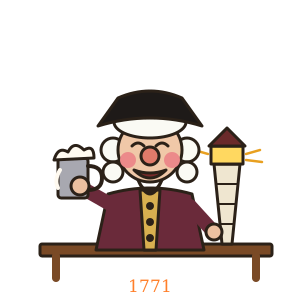 The engineer followed the engine. For four centuries the word meant a military man, someone who built fortifications and siege works, or blew them up. In the 1760s John Smeaton, who had rebuilt the Eddystone lighthouse on a reef off Plymouth, began calling himself a civil engineer so that people would not mistake him for a soldier. In 1771 he and a few colleagues founded a dining club, the Society of Civil Engineers, which met in a London tavern to talk over canals and harbors.
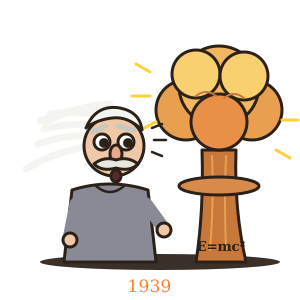 The adjective was a widening at the time. It claimed the soldier’s ingenuity for bridges, mills and drains, and the work grew from there faster than anyone could name it. Asked for a list of every kind of engineering, a reference source has to admit there’s no finite answer: biomedical, chemical, acoustical, textile, packaging, fire protection, forensic, quantum, and new ones each decade as the fields cross. The activity has no edges.
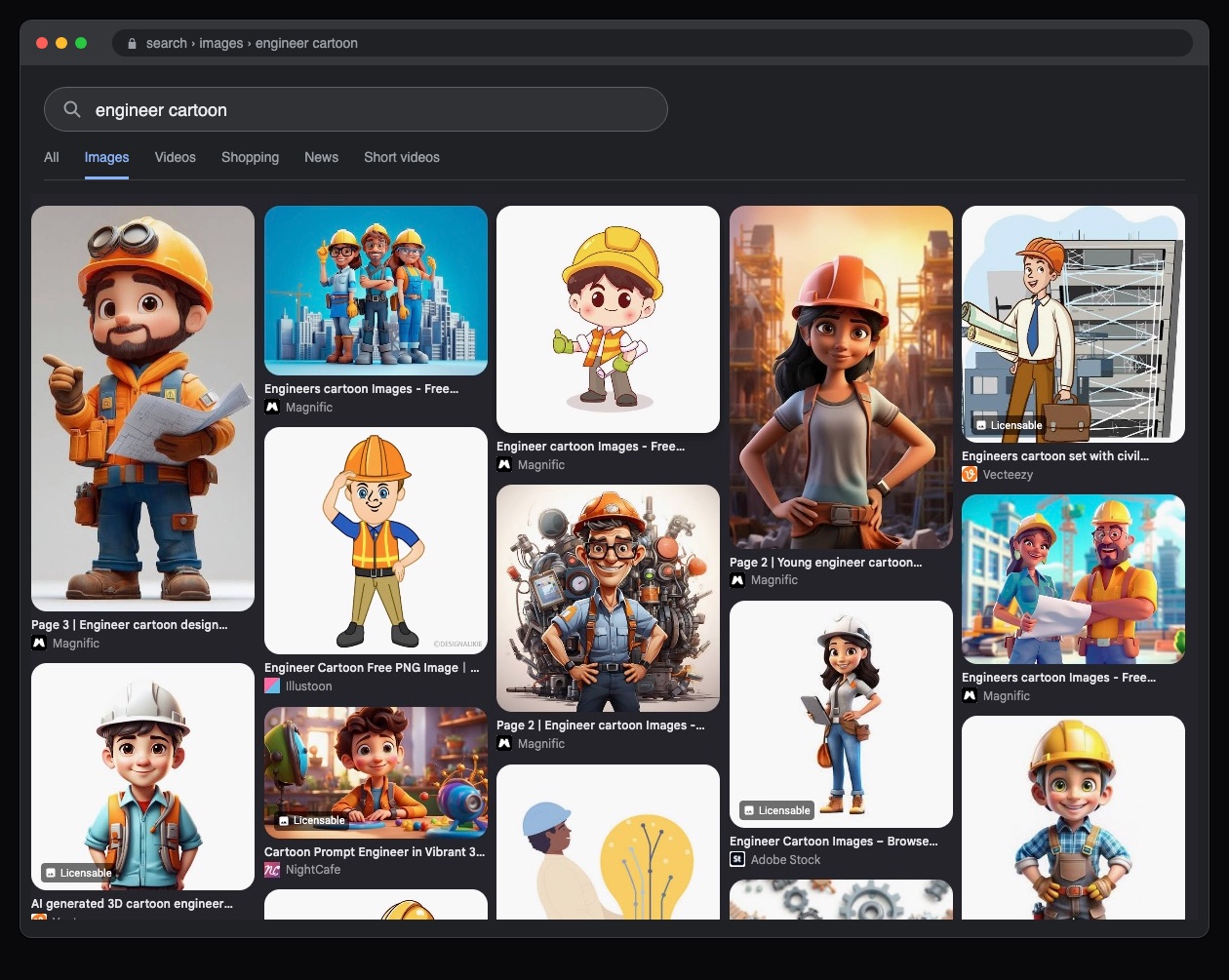
An image search for “engineer cartoon,” October 2026. The activity has no edges, the picture has a hard hat.
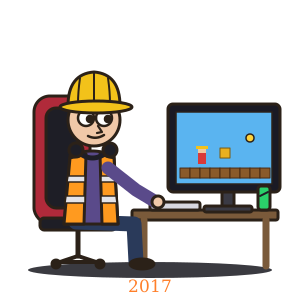
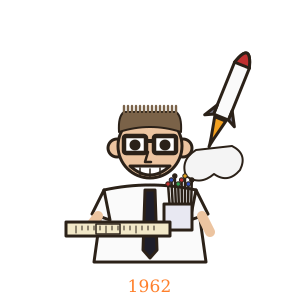 The title does. In most American states, engineer is a protected word, and using it without a state license can be a violation. In 2017 Mats Järlström, an electronics engineer trained in Sweden and living in Beaverton, Oregon, was fined $500 by the state’s engineering board. His offense was writing “I am an engineer” in letters arguing that the yellow lights at intersections were timed too short. Nobody claimed his math was wrong. The board’s position was that a person without its license could not publicly describe himself by the word, or apply the methods it named, to a traffic signal. A federal court eventually sided with him, and the arithmetic he had worked out found its way into a proposal before the Institute of Transportation Engineers.
 So the word that once named an inborn wit now names a credential granted by a board. Some trust in credentials is reasonable, a bridge is not a place to discover that its designer was guessing. But the trust a reader places in a structural stamp is a different thing from the right to say what one does, and a free society needs ways to know whom to trust that don’t require fencing a common noun. Järlström’s lights were an exercise of ingenium in its first sense, a native capacity turned on a problem in plain view of his neighbors.
Ingenious and ingenuous
The Latin had a twin. Beside ingenium, wit, sat ingenuus, from the same in and gignere: native, born in the place. In Roman law the word had an exact meaning. An ingenuus was a person born free. A slave who was freed became a libertus, a freedman, and carried certain disabilities for life: he owed duties to his former master, and some offices were closed to him. His children, born after his freedom, were ingenui. Liberty that had to be granted in one generation was native in the next.
From that legal standing came a character. The freeborn were supposed to be frank and open, with nothing to hide and no master to flatter, so ingenuus also meant candid, noble, straightforward. Ingenuitas was the condition of being freeborn, and by extension the candor that went with it.
English borrowed both families and could not keep them apart. Through the seventeenth century writers used ingenious and ingenuous almost interchangeably. Ingenuity arrived in the 1590s meaning nobility or frankness, the Latin ingenuitas, and by the 1640s the confusion had pulled it over entirely, so that it came to mean cleverness at contrivance, the sense it has now. The noun from the candid word became the noun for the clever one.
Then ingenuous narrowed on its own. The candor of a free person, someone with no reason to dissemble, came to be read as innocence, and innocence as naivety. An ingenuous remark today is one made by someone who doesn’t know better. A society that had learned to expect calculation started to hear frankness as a lack of it.
The muddle tells something true, though. The two words were never far apart. Wit and candor were both thought of as inborn, and both were taken to belong most fully to someone born free. The mixed-up ingenuity of the 1640s holds both at once: the faculty that devises, and the standing of a person who devises for no master.
The Ingenuus
Social libertarian reformers could do worse than take the old word as a name. We would call ourselves the Ingenuus.
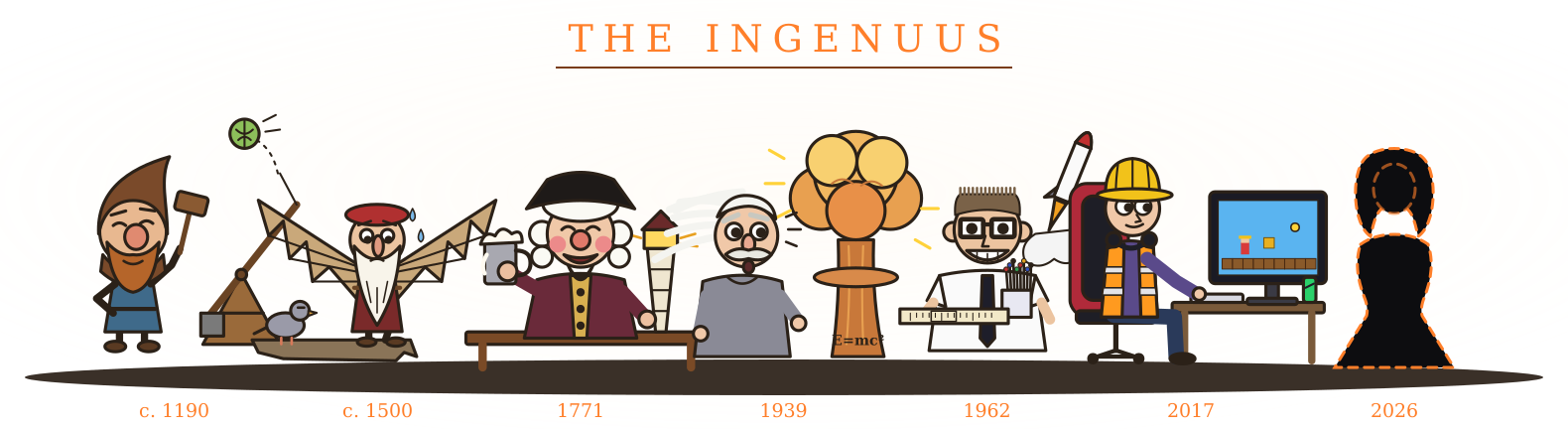
The name holds each sense the narrowings stripped away. It means freeborn, in the sense the Roman freedman’s children were, liberty as a native condition rather than a grant that can be revoked. It means ingenious in the sense of ingenium, the inborn capacity to devise a tower, a lighthouse, a corrected yellow light, a land trust, a better tax, without first asking a board whether that capacity may be named. And it means ingenuous in the sense the word had before it came to mean gullible: frank, saying plainly what we are building and how.
That last sense costs something. Reformers who say exactly what they intend, and who build openly in the spirit of the society they want rather than waiting for permission, will be called naive. In the modern meaning of the word they partly are, since candor gives away advantages that calculation keeps. The Romans would not have heard that as an insult. For them it was simply how someone talked who had been born free.
Richard’s engynours put up their tower in front of a city wall, in full view of the defenders, with nothing hidden about its purpose. The skill—and importance—was in the making, and the poet called it queynte.
A note on how this piece was written: the subject, the words it follows, and the name it proposes are mine. The sentences were drafted with AI assistance from that direction and then edited by hand. I would rather say so plainly, as the name asks.