 Social Liberty

Ralph Merkle
Alan Forester-Kaiser ·
Most democracies have an Executive Officer, such as the President of the United States, typically elected either directly or indirectly by the people. In a DAO Democracy, assuming we retain the Executive Branch in more or less its current form, the simplest approach would be to appoint, as President, that person the prediction market said […]
Another problem with evaluating collective welfare is membership in the collective: who do we add and who do we remove? We consider criteria that are suitable for membership in a nation (in contrast with membership in the local chess club, or a student in a school, or a shareholder in a company). Traditionally, for democracies, children of […]
We now give an example of how to buy and sell DCWi in a prediction market. First, a trader purchases a pair of conditional bearer bonds from a bank for $1 in the year 2016. The first says “Pay to bearer $1 times DCW2016” The second says “Pay to bearer $1 times (1-DCW2016)”. Because DCW2016 is between […]
– Ralph Merkle State of Satisfaction. Annually, all citizens are asked to rank the year just passed between 0 and 1 (inclusive). If you wish, you can think of this as a poll of each citizen’s individual welfare, where 0 means the welfare of the citizen that year was the worst possible, and 1 is the […]
– Ralph Merkle Futarchy, proposed by Robin Hanson, is a proposal to govern by prediction markets. The proposal seems like an excellent approach for improving upon existing democratic forms of governance. The general concept: To aggregate knowledge from across a community of people, using a method that’s known to be effective: prediction markets. Use that […]
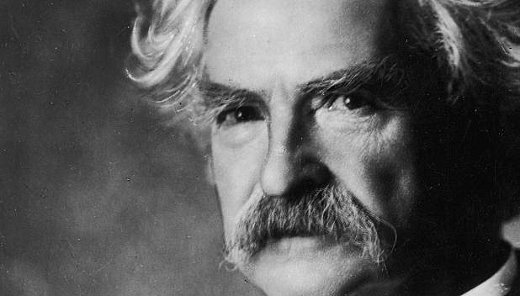
– by Mark Twain “Give me whereon to stand”, said Archimedes, “and I will move the earth.” The boast was a pretty safe one, for he knew quite well that the standing place was wanting, and always would be wanting. But suppose he had moved the earth, what then? What benefit would it have been […]
Land Use and Public Property We recognize the right of property owners to control, use, transfer or dispose of their property in any manner that does not violate the rights of others. We believe that rights to land and any related water, oil or mineral rights are entitled to the same respect and protection. We […]
Iroquois society was based in the matrilineal clan where women lived with their classificatory sisters – applying the principle that “my sister’s child is my child”. Because they lived and worked together, women in these communal households felt strong bonds of solidarity with one another, enabling them when necessary to take action against uncooperative males. […]
Derived from Abdullah Ocalan The right of self-determination of the peoples includes the right to a state of their own. However, the foundation of a state does not increase the freedom of a people. The system of the United Nations that is based on nation-states has remained inefficient. Meanwhile, nation-states have become serious obstacles for […]
In some of your writings, you, and some of your colleagues talked about how each mode of production, to borrow the Marxist terminology, tends to create a certain epistemology or way of looking at the world. Are there any other ideological trends commensurate with this economic change that are worth commenting on briefly? Well, the […]
Social Libertarianism is devoted to exploring ideas about social structures inherent in transitioning to a liberty oriented society