 Social Liberty
Lines Already Drawn
Four Senate seats, two open governorships, and eight constitutional amendments are on the ballot across the South on November 3. Several of the region's biggest decisions were made in May, before any of them were printed.
Click to enlarge
The South Rises described four states, Kentucky, Tennessee, Alabama, and Mississippi, held by one coalition at every layer at once, and asked whether the checks built into their governments still worked once the arithmetic stopped requiring them to. November 3 is the first time since then that voters in all four get to answer. They elect four United States senators, new governors in Tennessee and Alabama, and every seat in Kentucky’s House, and they decide eight amendments to three state constitutions.
What they won’t decide is in some ways larger. Tennessee’s legislature redrew its congressional map in three days in May and split Memphis three ways. The Supreme Court let Alabama return to a map that federal judges had found was drawn to dilute Black votes. Mississippi’s voters won’t see their state Supreme Court on the ballot at all, because the districts that elect it are still in court. What November Reassembles sorted the Great Lakes by who draws the lines. Across most of the South, the lines are already drawn.
Tennessee: three days in May
Tennessee was the first state to redraw after Louisiana v. Callais, the April 29 decision that requires plaintiffs in voting-rights cases to show a state drew its lines because of race. Gov. Bill Lee called a special session for May 5. On May 7 the legislature repealed a 1972 law against redrawing districts in the middle of a decade, passed a new congressional map, and sent both to the governor, who signed them the same day. The map divides Memphis and Shelby County among three districts and turns the state’s only Democratic seat, the majority-Black 9th, into a Republican one. “Memphis deserves Republican representation in Congress,” said Rep. John Rose. Rep. Steve Cohen, who had held the old 9th since 2007, announced on May 15 that he wouldn’t run in any of the new districts, and he remains a plaintiff in a suit against the map. A three-judge federal panel declined in July to block it, finding that politics rather than race drove the lines.
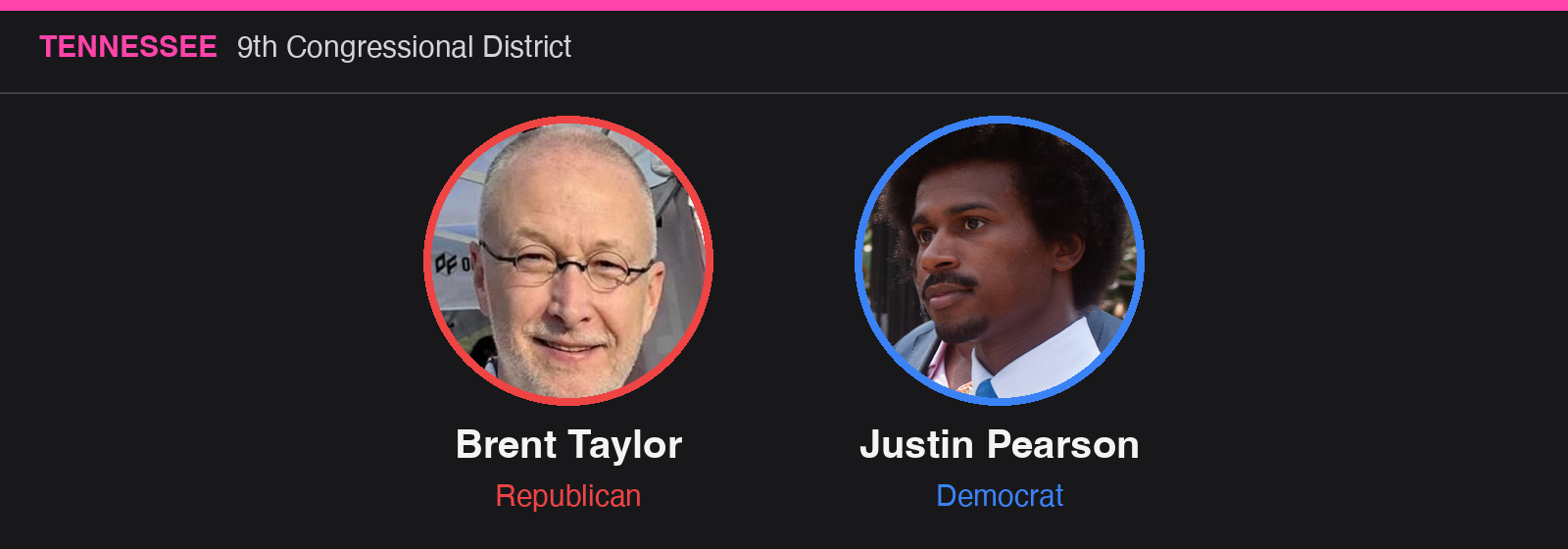 Photos: Brent Taylor, GatewayPolitics, CC BY-SA 4.0; Justin Pearson, TrentBenge, CC BY-SA 4.0.


The new 9th runs from Memphis east toward Nashville and would have voted for Donald Trump by twenty-one points. The Republican nominee is state Sen. Brent Taylor. The Democrat is state Rep. Justin Pearson, one of the three members the Tennessee House expelled in 2023 after a gun-control protest on its floor, who won his primary with about two-thirds of the vote.
 Photos: Marsha Blackburn, United States Senate Photographic Studio, public domain; Jerri Green, Zach Kinslow, CC BY 4.0; David Hatley, Hatley campaign.


The governor’s race is closer than the state’s lean suggests. Lee is term-limited, and Sen. Marsha Blackburn won the Republican primary in August with just 43 percent against Rep. John Rose and state Rep. Monty Fritts, without endorsements from either Trump or Lee. The Democrat is Jerri Green, running on costs and public school funding. The wild card is David Hatley, a conservative East Tennessee businessman running as an independent because his criminal record kept him off the Republican primary ballot. Blackburn’s campaign pays for a website attacking his finances. A Spry Strategies poll taken October 10 to 16 had Blackburn at 43.5 percent, Green at 32, and Hatley near 12. A poll released by Green’s campaign the same week had Blackburn just under 36, Green just over 34, and Hatley at 19. Neither shows Blackburn near a majority. Sen. Bill Hagerty faces Marquita Bradshaw, the Memphis organizer he beat in 2020, and led her 51 to 31 in August.
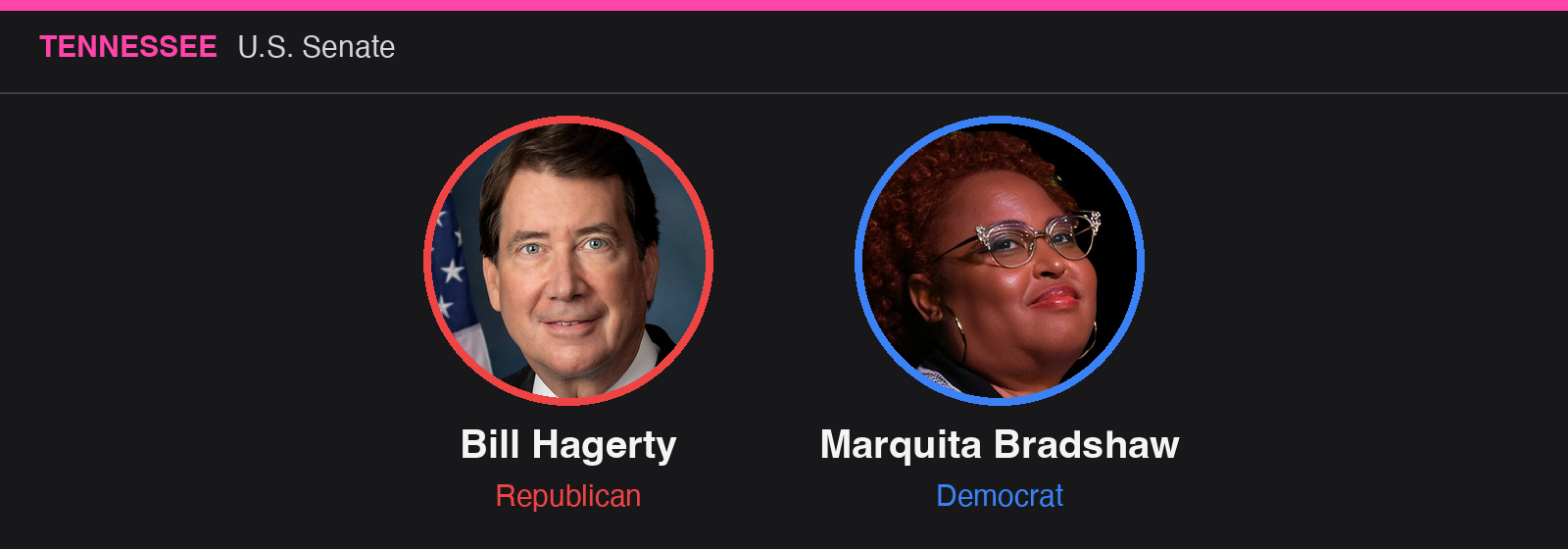 Photos: Bill Hagerty, United States Congress, public domain; Marquita Bradshaw, Bradshaw campaign.

Tennessee’s three amendments face a higher bar than most. The state constitution requires an amendment to win a majority of everyone who votes in the governor’s race, not merely of those who answer the question, so a voter who skips an amendment effectively votes no. This year the questions sit near the top of the ballot, beside the governor’s race. Amendment 1 would let judges deny bail to defendants charged with any of seventy-three serious felonies. Amendment 3 writes a list of crime victims’ rights into the constitution, including full and timely restitution. Amendment 2 would forbid the legislature from ever levying a state tax on property. Tennessee has no state property tax now, and local property taxes would be untouched. But the ban would take the state’s own land off the table as a source of revenue for good, and with it any future state land value tax of the kind Land as Road and these essays have argued for, in a state with no income tax that leans heavily on the sales tax.
Alabama: a residency question, and a reinstated map
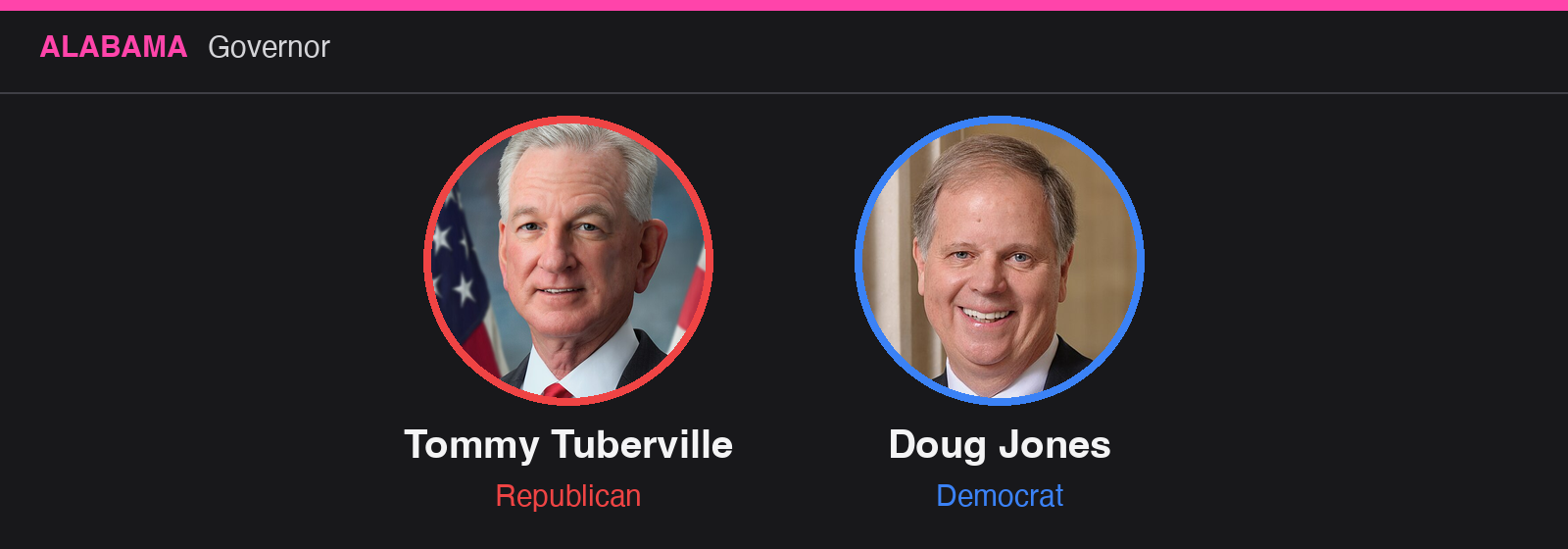 Photos: Tommy Tuberville, United States Senate, public domain; Doug Jones, U.S. Senate Photographic Studio-Renee Bouchard, public domain.


The governor’s race is a rematch. Sen. Tommy Tuberville, who beat Doug Jones by twenty points for the Senate in 2020, won the Republican primary for governor with 85 percent, and Jones won the Democratic primary with 79. Polls taken October 15 to 17 by Cygnal and the Alabama Poll both show Tuberville at 51 percent and Jones at 39 or 40. Jones is running on Medicaid expansion, a state lottery, and a promise to replace the Alabama Public Library Service board with nonpartisan appointees. Tuberville is running on crime.
Tuberville’s campaign spent most of the year answering a question about where he lives. Alabama requires a governor to have lived in the state for seven years. Tuberville retired from coaching to Florida in 2017, owns a home in Santa Rosa Beach valued around $5.6 million, says he moved back to Alabama in August 2018, and voted in Florida that November. His house in Auburn was bought in the names of his wife and son, and his name went on the deed in 2024. Two party challenges and four lawsuits followed. All were dismissed, for venue, jurisdiction, or standing, and none reached the question of whether he meets the requirement. The Alabama Supreme Court dismissed the last appeal 7 to 0.
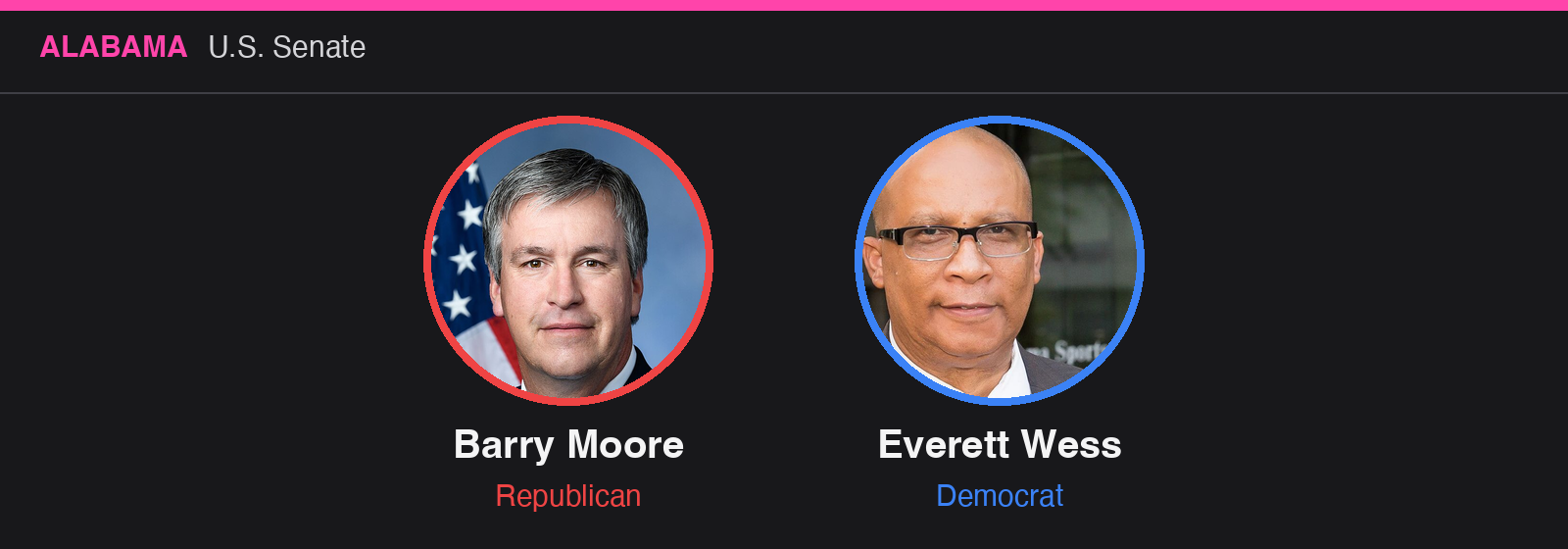 Photos: Barry Moore, United States Congress, public domain; Everett Wess, Wess campaign.

Tuberville’s Senate seat is open. Rep. Barry Moore, the Republican nominee, led the Democrat, attorney Everett Wess, 56 to 35 in an October poll.
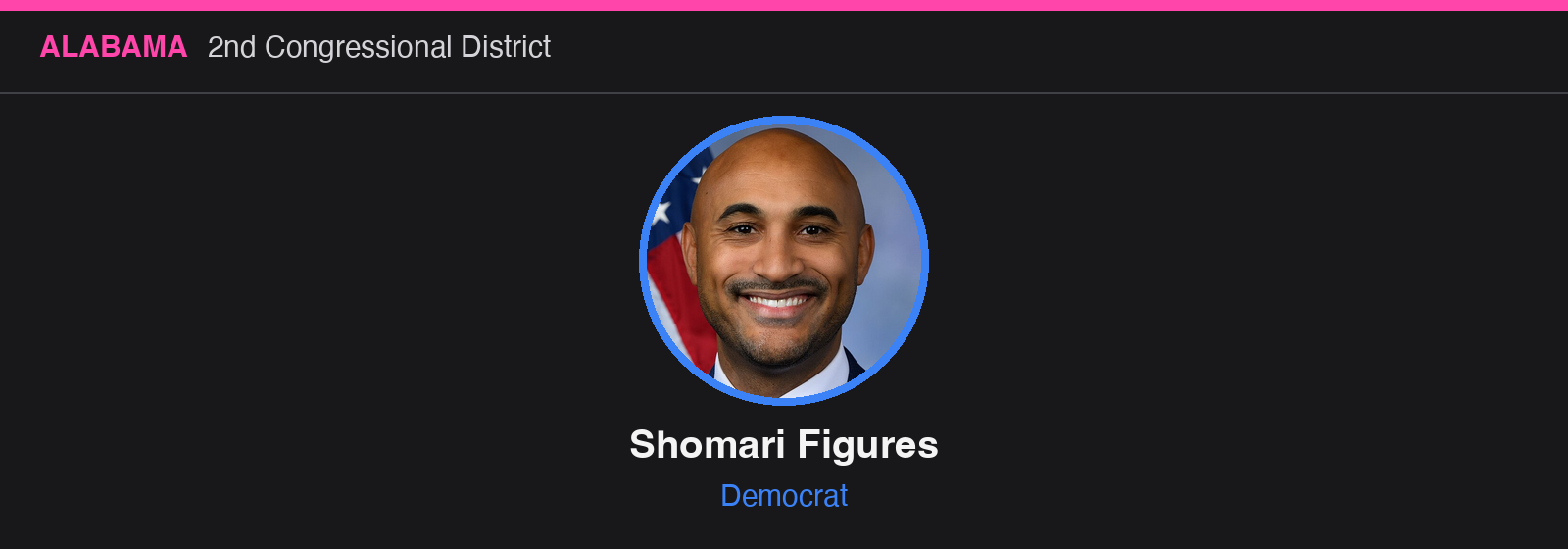 Photos: Shomari Figures, House Creative Services, public domain.

The map is the story The South Rises left unfinished. After Callais, the Supreme Court on June 2 let Alabama use the congressional map its legislature passed in 2023, which a three-judge panel of Republican appointees had found intentionally discriminatory. The 2nd District, drawn by a court in 2023 to give Black voters a real chance to elect their candidate, drops from about 49 percent Black to under 40, according to AL.com, and Rep. Shomari Figures, elected there in 2024, is now an underdog. “This is still far from over,” he said, and the underlying case continues.
Alabama’s four amendments are smaller in scope, and one of them reaches the same question New England is arguing about. Amendment 2 would let neighboring county school boards merge. A merger would go to a vote only if a quarter of the qualified voters in an affected district petitioned for one, and it would need a majority across the whole merged area. Longest Warrant followed Vermont’s fight over consolidating small town schools from the state level down. Alabama’s version starts with the boards and lets residents force a vote, though a petition from a quarter of the voters is a high bar in places where school elections draw a sliver of them. Amendment 1 lets the state fill a lieutenant governor vacancy two years sooner and tightens the approval of legislators’ expenses. Amendment 3 requires the Pledge of Allegiance in schools and protects student-led prayer, both already required or protected by existing law. Amendment 4 requires schools to play the national anthem once a week.
Kentucky: an open seat, and a pardon window
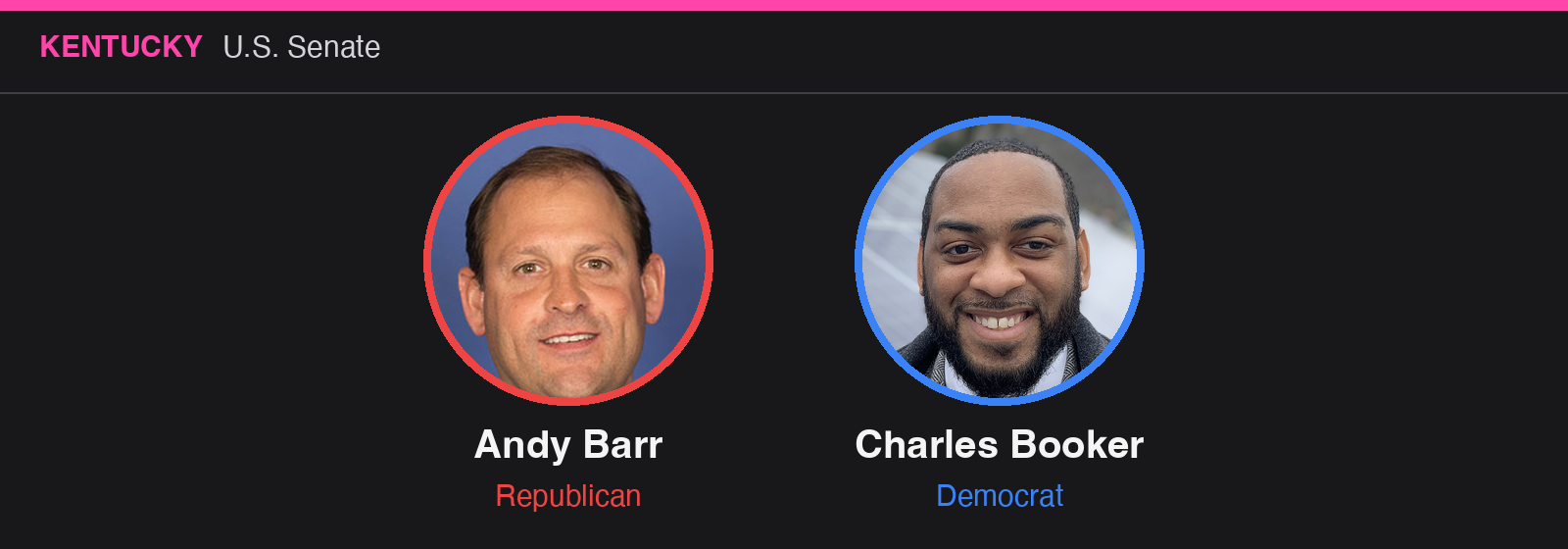 Photos: Andy Barr, US Congress, public domain; Charles Booker, Breadwin, CC BY-SA 4.0.


Mitch McConnell, first elected in 1984, is leaving the Senate after seven terms. Rep. Andy Barr beat former Attorney General Daniel Cameron for the Republican nomination with 60.5 percent and faces Charles Booker, the former state representative who nearly won the Democratic nomination in 2020. Forecasters rate the seat safe Republican, and the most recent public poll, a Democratic one from late August, had Barr ahead 49 to 40.
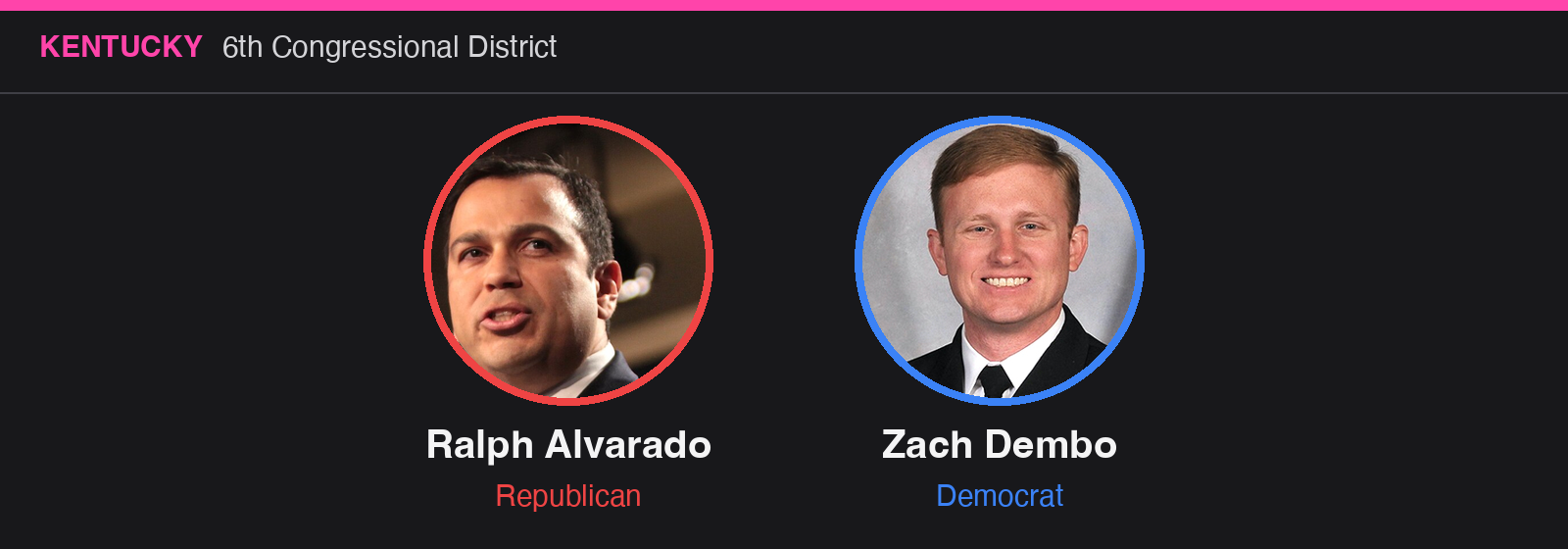 Photos: Ralph Alvarado, Gage Skidmore, CC BY-SA 3.0; Zach Dembo, U.S. Navy, public domain.


Barr’s House seat, the 6th District around Lexington, is the closest race in the region. The Republican is Ralph Alvarado, a former state senator who was Gov. Matt Bevin’s running mate in 2019. The Democrat is Zach Dembo, who has outraised him $3.2 million to $2.3 million and led in the few public polls.
Alvarado’s old ticket is also the reason for Kentucky’s only amendment. After losing that 2019 election, Bevin issued hundreds of pardons and commutations in his last weeks in office, including to people convicted of homicide and child rape. Amendment 1 would forbid any governor from granting pardons or commutations from sixty days before a governor’s election until the next term begins. State Sen. Chris McDaniel pushed the idea for years, and it passed the legislature this year as Senate Bill 10 with votes from both parties. Gov. Andy Beshear’s office opposes it: Bevin abused the power, his office said, and the remedy is electing good governors. The ACLU of Kentucky calls the pardon a safety valve in an imperfect justice system. A pardon is the one place in American government where a single official may overrule the courts on behalf of one person. The amendment wouldn’t touch that power for most of a term, only for the last few weeks before a governor’s own job is decided.
All 100 seats in the Kentucky House and half the Senate are on the ballot, along with mayors in Louisville and Lexington. The legislature’s veto-proof majority, which overrode nearly all of Beshear’s thirty-plus vetoes this spring, isn’t in danger. Beshear himself is term-limited in 2027.
Mississippi: a closer race, and an empty line on the ballot
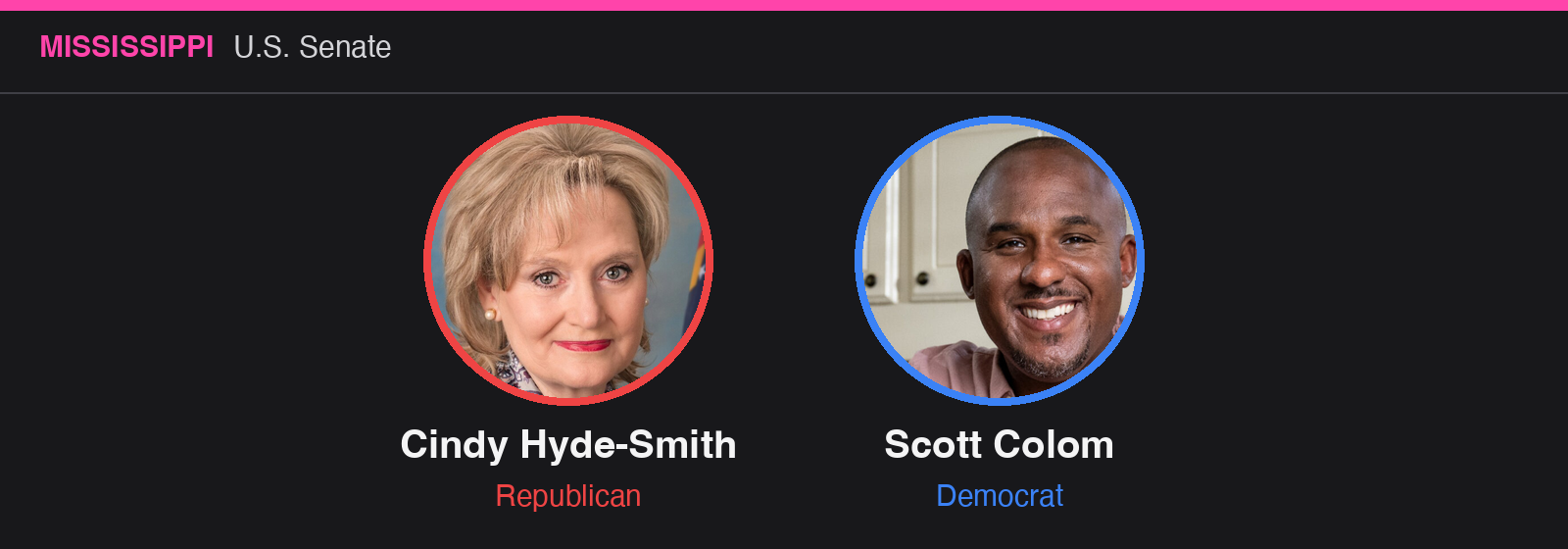 Photos: Cindy Hyde-Smith, United States Senate, public domain; Scott Colom, Colom campaign, photo by Christopher Dilts.

Sen. Cindy Hyde-Smith is the only incumbent senator in the region with a real race. Her Democratic opponent, Scott Colom, the district attorney for four counties in the Golden Triangle, won his primary in March with 73 percent. Hyde-Smith took 81 percent in hers against a physician, Sarah Adlakha. Polling is thin and mostly Democratic: Change Research had Hyde-Smith up 43 to 40 in a survey taken October 21 and 22, and Data for Progress had her up six in August. The Cook Political Report rates the race likely Republican. Senate Majority PAC, the main Democratic super PAC, is spending $1.2 million on ads through Election Day.
The last Democrat Mississippi sent to the Senate was John Stennis, who won his seventh full term in 1982 by beating a young Haley Barbour, 64 percent to 36. When Stennis retired in 1988, Trent Lott took the seat, and Republicans have held both of the state’s seats since. The closest a Democrat has come since then was Mike Espy, a former agriculture secretary, against Hyde-Smith herself: she beat him by seven points in the 2018 special election runoff and by ten in the 2020 rematch.
What Mississippi voters won’t find on their ballot says more about the region. In August 2025, Senior U.S. District Judge Sharion Aycock found that the district lines used to elect the Mississippi Supreme Court, unchanged since 1987, illegally diluted Black votes in the court’s central district, and she barred further elections on them. No Black justice in the state’s history had won a seat without first being appointed. After Callais, the Fifth Circuit threw out her ruling on May 11 and sent the case back to her. The plaintiffs’ lawyer, Carroll Rhodes, called the new standard of proving intent “almost impossible.” Aycock reopened the case in July. Briefs are due the day before the election and a hearing is set for November 16. Meanwhile no Supreme Court seat is on the ballot anywhere in the state. The same three districts elect the Public Service Commission and the Transportation Commission, so the outcome will shape six more statewide offices in 2027.
The legislature held eight public hearings around the state through October 1 on redrawing its congressional, legislative, and judicial districts. It hasn’t proposed a map. Mississippi’s one Democratic congressional seat, Rep. Bennie Thompson’s majority-Black 2nd District, is the obvious target of any congressional redraw, and the obvious question for a special session after the election.
What to watch
In Tennessee, watch whether Hatley’s share holds near the high teens. If it does, Blackburn could win the governorship with well under half the vote, and each amendment will need a majority of everyone who voted for governor, however many of them skipped the question. In the new 9th District, Pearson’s margin in Memphis against Taylor’s in the rural counties will show how the split works in practice. In Alabama, watch the 2nd District, the one race in the state where the map is the whole story, and Amendment 2, the region’s only question about who controls a local institution. In Kentucky, the 6th District is the region’s one competitive House race, and Amendment 1’s margin will show how long Bevin’s pardons have stayed in voters’ memory. In Mississippi, Hyde-Smith’s margin against Colom will measure whether the Democratic money was worth spending, and the November 16 hearing before Judge Aycock will decide whether Mississippians get to vote for their Supreme Court in 2027 or wait for new lines drawn under the standard Callais set.
Sources: Wikipedia, 2026 Tennessee redistricting, 2026 Tennessee elections, and 2026 Tennessee gubernatorial election; Tennessee Lookout, Longtime US Rep. Cohen announces he won’t run in Tennessee’s gerrymandered districts, Who’s running in Tennessee’s new 2026 U.S. Congress races, and Tennessee puts constitutional amendment questions near top of the ballot next to governor’s race; Inside Elections, Tennessee primary results; Nashville Banner, Independent David Hatley adds intrigue to governor’s race; Spry Strategies, Tennessee Statewide Survey, October 2026; WPLN, Hagerty will face Marquita Bradshaw for a second time; Local Memphis, Breaking down Tennessee’s proposed constitutional amendments; Tennessee Secretary of State, 2026 proposed constitutional amendments; Wikipedia, 2026 Alabama gubernatorial election and 2026 United States Senate election in Alabama; WALA, Tuberville leads Jones 51-40 percent in Gray and Alabama Daily News poll; NBC News, Supreme Court allows Alabama to use congressional map that eliminates a majority-Black district; ABC 33/40, ‘Still far from over’: Congressman Shomari Figures on Alabama redistricting; WBHM, Alabama has 4 constitutional amendments on the ballot in November; Wikipedia, 2026 United States Senate election in Kentucky, 2026 Kentucky elections, and 2026 Kentucky Amendment 1; Kentucky Lantern, Kentuckians will vote on pardon limits; Spectrum News 1, Governor pardon power constitutional amendment explainer; FOX 56, Kentucky’s 6th District congressional race; Wikipedia, 2026 United States Senate election in Mississippi; Cook Political Report, Mississippi Senate 2026; NBC News, Democrats jump into Mississippi Senate race; Mississippi Independent, Mississippi voters get no say on Supreme Court this year; NPR, Special elections ordered for Mississippi Supreme Court after voting rights violation; Legal Defense Fund, Redistricting Watch: tracking the aftermath of Louisiana v. Callais.