 Social Liberty
Three Frames of Government
The frame we live in teaches each of us what government is for, and so what a neighbor or a community is.
Click to enlarge
A fish is the last creature to learn about water. A child raised in a house where the rules are written down, posted and enforced by a parent learns a good deal more than the rules. She learns who decides, who asks, and what a person does when she wants something to change. By ten she holds the structure as a belief about how the world must work, and she holds it so deeply that she doesn’t call it a belief. It is just how things are.
A country does the same thing to its citizens, only slower and with more paperwork. William Penn called his 1682 constitution for Pennsylvania a Frame of Government, and the word was well chosen. A frame is not the walls, the furniture or the people in the house. It is the structure that decides where the walls can go. Frameworks looked at how a frame sets the slots that everyone’s work fills. This essay is about what a frame does to the person inside it, since the thing it most reliably produces is a set of convictions about what a government is, what a community is, and what one person may do to another.
There are at least three frames on offer, and each of us was raised in one of them and mistook it for the weather.
Frame one: government above the people
In the first frame the government is the boss. It is not necessarily intentionally a cruel boss, and in much of the country now it is a solicitous one. It sees to the sustenance of those who need it and to the behavior of everyone, and it regards these as one job. The same office that sends the check publishes the rule about how the check may be spent, and it never occurs to anyone that those are separate offices.
Americans mostly encounter this frame in the states called blue, and the name for the politics that goes with it is liberalism. That is a curious name for it. The word once meant something close to the opposite. John Stuart Mill, in On Liberty in 1859, put the liberal principle in one sentence: “the only purpose for which power can be rightfully exercised over any member of a civilized community, against his will, is to prevent harm to others. His own good, either physical or moral, is not a sufficient warrant.” A frame built on that sentence would have a government that waits to be called. The frame we are describing has a government that calls, schedules, inspects and follows up.
Tocqueville saw it coming in 1840, in the second volume of Democracy in America. He pictured a power that would “cover the surface of society with a network of small complicated rules, minute and uniform,” and that would not break a man’s will but “soften, bend, and guide it.” Such a power, he wrote, is “absolute, minute, regular, provident, and mild.” He called what it did to a people a soft despotism, and said they would be reduced “to nothing better than a flock of timid and industrious animals, of which the government is the shepherd.”
There is a plain structural reason the frame holds. In several blue states the public-employee unions are among the largest donors to the campaigns of the legislators who set those employees’ pay, staffing and duties, and the same employees are the ones who administer the rules the legislators pass. A body that elects its own regulator, or very nearly, does not need to be malicious to grow. Every new rule has a constituency inside the machine, and every repeal has nobody inside it. The result is not tyranny in the old sense. It is a government that cannot stop attending to the smallest details of how neighbors arrange themselves, because it is where its own members’ work comes from.
Frame two: a wall
The second frame is the reaction. Thomas Jefferson, writing in 1802 about religion, said the First Amendment had built “a wall of separation between Church and State.” Take the image out of its setting and set it up around everything: a wall that keeps government out of the detail of each person’s life, with a small number of doors for the things the wall exists to protect, such as defense, courts and contracts. Inside, people arrange themselves.
The Bill of Separations is a discipline that sets out twelve rooms of the house that the state does not get to enter at all, from church and speech to property, education, medicine and technology, each one an article in the plainest terms it will bear. It begins with church and state because that wall already stands: nobody credible proposes a Department of Correct Doctrine, and nothing in American life has collapsed for the lack of one. A right, the Bill argues, is a claim a person makes against the state inside a relationship the state still administers, and it gets balanced, narrowed in wartime and argued away as an exception. A separation takes the room out of the state’s jurisdiction, so that no one has to win the argument again each year. The wall of the second frame is that kind of wall, and Jefferson’s sentence is the first article of it.
The reason for keeping the state out of the church was never the building. It was that a person’s deepest meaning, what she lives for and who she lives it with, is hers to find and not the state’s to supply or to supervise. Churches are one place people find it, and no longer the only one. A family is another, and so are a friendship that has lasted forty years, a craft, a team, a band, a union hall, a neighborhood, a table where the same people eat on the same night. Call these the social church: the parts of life that deliver spiritual meaning to us, whatever name we give the meaning. A state that would never presume to say which prayers are correct is still happy to say which gardens, which schools of art, which ways of raising a child, which ways to walk the dog and which ways of dying are. The Bill of Separations extends the old wall to these rooms. The state may pay for the water main. It does not get to tell the congregation of a garden how to tend its sacrament.
This is the frame of the old liberal and of the modern libertarian, and it has a clean appeal. Everyone who hits a rule they didn’t make can see the wall as the answer. Its weakness shows up when the wall is the only thing anyone believes in. A wall settles what the government may not do. It says nothing about what the people on the inside are to do with one another, even if a good deal of what they do is not pleasant. A person who has learned to want the rule and then finds there is no rule to get can only keep wanting it.
Frame three: the people are the boss
The third frame is the one the Preamble describes in its first three words. “We the People” does not say the people are protected from the government, or fed by it. It says the people ordain and establish, and the government is a thing they establish. In that frame a government does not govern in the daily sense, since the people govern themselves in the thousand associations of ordinary life. It is called in, as an employee or a contractor is called in, to do the things that need doing at scale: build the bridge, keep the water clean, settle the dispute that two parties could not.
From Time to Time reached for Madison’s phrase from the Constitutional Convention. In Article I, Section 9 the accounts of the government are to be published “from time to time,” and the phrase matters here for a different reason. It describes the third frame’s idea of what a government does. It shows up when the need is there, and it is seen to have done its job, and otherwise it keeps out of the room. The first frame is a government that is always present. The second is a government that is absent by law. The third is one that comes when it’s asked.
A woman with a clipboard
To see what each frame does to a person, take one person and hold her constant. Call her Francine. She is a retired schoolteacher, perhaps sixty-five, who has a strong sense of how things should be done and a high tolerance for telling other people. She is neither malicious nor stupid, and she is mostly right within the frame. She has joined the community garden at the end of her street, a lot of forty-odd raised beds on land the city owns, and she has noticed that the man in bed 31 has put up a trellis for his pole beans that stands seven feet high, which is what pole beans want. It shades two beds on its north side. It looks, she thinks, ridiculous.
Francine has a view about whether the government should regulate the height of trellises. Her view is a product of the frame she grew up in, and it comes out differently in each.
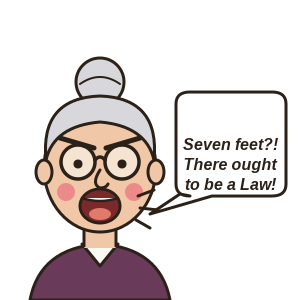 In the first frame, Francine’s instinct is the one the frame taught her: there ought to be a Law, and there ought to be someone to enforce it. She wrote to the garden coordinator, who is a city administrative employee, and was told that the city’s community garden program has guidelines but nothing on trellises. Francine is not discouraged. She attends the program’s advisory meeting and proposes a limit of five feet, and she gets it, because the people at the meeting are the people who attend meetings, and the program’s staff would like a standard they can point to. Within the year the rule has a section number and a form for requesting a variance, and the man in bed 31 gets a letter.
Look at what Francine has learned. She has learned that the way to make a neighbor do something is to write it into the rules and let an office do the telling. She did not have to knock on his door. She did not have to explain, or be told no, or find out why seven feet suited him. Her will went through a channel and came out the other side as an official fact, and she never had to carry any of the cost of it, which was the man’s irritation and the program’s time. Two or three years of this and Francine is a different person. She no longer asks whether something is her business, because there is always an office that can make it so.
She also has learned what “community” means. In the first frame a community is a jurisdiction, a population administered by a body that tells it how it is doing. Her garden is a program. The people in it are participants. When she says “the community wants a five-foot limit,” she means that she and four others attended a meeting.
Now follow the proposal upstream, to the parks commission that has to take it up. The commission meets once a month and its agenda has room for so many items. A trellis-height standard needs a staff report, a comment period, a draft ordinance, a revision after the gardeners from bed 12 object that it is too low and the gardeners from bed 40 that it is too high, an exemption for accessibility, a legal review of the exemption, and a second reading. Over a few meetings that is hours of seated, paid and unpaid attention from people who are not stupid and are mostly trying. Nobody there is acting in bad faith. The trouble is that those hours were spent.
Bastiat made the point in 1850, in his essay on what is seen and what is not seen. The trellis ordinance is the thing seen. It has a section number, a vote and a headline. What goes unseen is the pool’s boiler that was deferred for another budget cycle, the restroom at the far end of the park that stayed locked, the path to the school that no one got to, the conversation about what to do with the lot behind the library. None of those was voted down. They were never reached, because the meeting ran out of evening. An office that regulates everything has a finite attention, and every minute it spends on a trellis is a minute it does not spend on the thing only a government can do. In the first frame the gardeners’ small decisions are the government’s business, and the government’s real business waits its turn behind them.
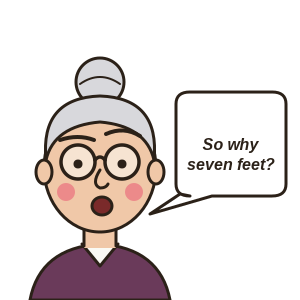 In the second frame, the city has no business in the matter at all. The wall has kept it out of the garden, and the garden is run by whoever runs it, a club of gardeners with bylaws and a lease or a landowner’s permission. That sounds like an improvement for the man in bed 31, and mostly it is. But look at Francine. She walks to the garden meeting and finds that nobody there has any power to compel anyone. She can propose a limit; the club may adopt it and the man may ignore it, and the club has no sheriff. Her will has met, for the first time in a long while, the plain fact that another person has one too.
What she can do is what people did before there were offices. She can go and look at the trellis, and she may find that pole beans simply climb that high and stop. She can ask him. She can offer to swap beds. She can plant something shade-loving and tell the club how well it grew. She can organize a group of gardeners who want a limit and form a second garden with one. All of these cost her something, and all of them depend on the other person’s consent, so she has to be good at persuasion and willing to lose.
This is where Francine, if she is going to grow, grows. Influence is what is left of a will once coercion has been taken out of it. It is the harder skill and the one the first frame lets atrophy. Elinor Ostrom, who won the Nobel prize in economics in 2009 for her work on how communities manage shared resources, found over decades of fieldwork that groups of people with no outside enforcer often kept up rules of remarkable detail on fishing grounds, irrigation channels and alpine meadows. What the rules had in common was that the people who lived under them had made them, could change them, and watched one another. The rules held because they were the neighbors’ own, not because anyone was sent to check.
The frame’s weakness is that the second garden needs somebody to go to when the quarrel isn’t about a trellis. A man who dumps chemicals on a shared bed, or a club that shuts out a family because of who they are, is not helped by a wall. The wall must have doors, and a frame that forgets this teaches its citizens a different mistake: that every request for help from outside is an invasion.
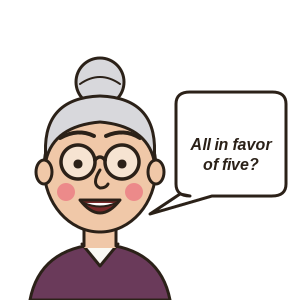 In the third frame, Francine has a vote and a boss’s habits. The garden belongs to the people who garden in it, and the city is something they hire. The gardeners decide the trellis question themselves, at a meeting, by a rule they write into their own bylaws, and if Francine wants a five-foot limit she has to convince a majority of the people who will live under it, one of whom is the man in bed 31, who is entitled to speak. If the rule passes, the gardeners enforce it the way a club does, by asking, by a notice on the board, and by a vote on the ultimate question of whether to renew a plot.
The city’s part is smaller and clearer. It supplies the land and the water line. It comes when the gardeners ask for a thing only a city can do: a delivery of soil, a decision on the lease, a ruling when two clubs claim the same lot. It does not write the garden’s rules, and it does not have a standing view about trellises. It is, to borrow Madison’s phrase, there from time to time.
What does Francine learn in the third frame? That her will is one voice among forty, that it’s a voice worth using, and that when she’s right she can win without a letter from anyone. She also learns what a community is in the third frame: not a population administered, and not a leftover after the wall, but a body of people who have the standing to decide how they live together and who call on government as one of their tools. The word has a different grammar here. In the first frame the community is what government acts on. In the third it is what government acts for.
Who a frame draws
A frame doesn’t only shape the people born into it. It also selects among them. Every structure has a kind of person for whom it is a natural home, and the kind who gather where the power sits are the ones who want it.
Francine is the mild case. In the first frame, a woman with her temperament has a career ahead: advisory boards, commissions, a staff job writing the guidelines. She goes up through the same offices that her rule goes down through, and each step she takes makes the next rule easier to write. The frame has put a premium on wanting to decide for other people, so the people who want that most are the ones who end up doing it. Nothing like this happens in the third frame, where the same woman is one voice among forty and has to earn every bit of the rest. The first frame’s top is a place the controlling are drawn toward and the tolerant are drawn away from, since a person who thinks the man in bed 31 is entitled to his seven feet has no reason to spend years of evenings in a hearing room.
The stakes rise with the subject. Trellises are the harmless end. The same will, with the same clipboard, reaches the beginning and end of life, because nothing is private from a government that sits above the people. John Paul II named the worst of it in 1995, in Evangelium Vitae: a “culture of death,” in which a society comes to treat the weak, the unborn, the sick and the old as problems to be managed. Whatever one thinks of the particular cases, the structural point does not depend on them. Where government is on top, the culture held by the people at the top is the program for everyone, and those who dissent from it are not left alone. They are required to take part.
Canada has the clearest recent example. It legalized medical assistance in dying in 2016, widened it in 2021 to people who were not near death, and the Ontario courts upheld in 2019 the medical regulator’s rule that a physician who objects on conscience must still refer the patient to one who will. A frame-one government doesn’t say that doctors may decline; it asks that they make themselves a link in the chain. The point doesn’t belong to either side. A frame-one government captured by the other side of that argument would conscript the other side’s conscience just as readily, and its supporters would be as surprised as Francine’s neighbor to find out how the machinery runs. What a frame makes possible, it makes possible for whoever holds it.
The second frame protects the dissenter and leaves the vulnerable exposed, since a wall that keeps the state from compelling the doctor also keeps it from protecting the patient. The third frame is the one that has an answer. Hospitals, congregations and neighborhoods decide among themselves how they will care for the dying and the newly born, a doctor can say no and a patient can go elsewhere, and the few lines no vote may cross, such as that no one is to be put to death for being a burden, are kept in plain view where everyone can check them. Nobody has to share a culture with anyone else, and nobody is made to join one.
What a frame teaches
Set the three Francines side by side and the differences aren’t in her character. She is the same woman with the same clipboard. The differences are in what each frame makes easy.
| Frame one | Frame two | Frame three | |
|---|---|---|---|
| Who is the boss | Government | Nobody, by law | The people |
| What government is for | Sustenance and behavior | Defense, courts, contracts | Services, from time to time |
| What “community” means | A jurisdiction administered | What is left inside the wall | People who decide together and hire help |
| How Francine gets a trellis rule | Writes it into the program | Persuades, or leaves | Persuades a majority, or loses |
| What Francine’s will becomes | A request to an office | A skill in influence | A vote she has to earn |
| What the frame forgets | That neighbors can talk | That neighbors can quarrel | That majorities can overreach |
The last row is the honest one. Each frame has a failure, and the third is not exempt. A garden majority can be as petty as a program office, and the man in bed 31 has less recourse against forty neighbors than he’d have against a clerk who has to follow a written standard. A frame that makes the people the boss has to make room for the minority of one, and that is why the third frame keeps the wall’s doors, a few rights that no vote reaches, and keeps them where the people can see them.
What is liberal about it
Say what you like about the first frame, it is the one in which the largest number of Americans now live, and its supporters call it liberalism. A government that holds the pen over every bed and trellis, that ties the sustenance of those in need to the behavior of everyone, and that is in effect elected in part by those who work for it has real benefits, and those who defend it can point to them. They cannot call it liberal in any sense that Mill or Locke or Adam Smith would have recognized. It is paternal. The first frame is a loving household, and a household has a head.
The more useful question is what a child raised in each house comes to believe. A citizen of the first frame believes that a good neighbor is one who files a request. A citizen of the second believes that a good neighbor leaves everyone alone. A citizen of the third believes that a good neighbor is one who turns up at the meeting, makes the case, takes the vote and then helps carry out the result. Only the third of these adds up to a community, and it is the one the Preamble had in mind. The people are the boss, and the work of being boss is the work of persuading each other, which can’t be handed to an office and does not stop with a wall.
Of, for and by
Lincoln ended the Gettysburg Address in 1863 by asking that “government of the people, by the people, for the people, shall not perish from the earth.” We recite it as one phrase, but it is three claims, and each frame keeps a different share of them.
Of the people says what a government is made from. In the third frame it is made of neighbors: its officers are drawn from the same streets as everyone else and go back to them, and a clerk is somebody’s neighbor, not a member of a class. In the first frame the “of” shifts toward “over.” The people are the population the government is of, the way a shepherd’s work is of the flock, and the staff become a body with interests of its own, which is the structural point about those unions and the legislators they help elect.
By the people says who does the governing, and here the frames split furthest apart. In the first frame the governing is done for you by an office, and by the second frame it is done by nobody at all inside the wall. Only in the third do the people do it themselves, in the garden meeting, the club, the congregation and the bylaws, where Francine has to make her case in front of forty neighbors and the man in bed 31. This is the claim that costs something. It is also the one the Bill of Separations protects, since a people can only govern themselves in rooms the state has not already entered, and the social church is where most of that governing is done.
For the people says what the government is for. The first frame is generous with it. It says it knows what is good for you, and the sustenance and the rules both come out of that sentence. The second frame keeps the thinnest “for”: defense, courts and contracts, and a door that opens for little else. The third puts the “for” last, because it follows from the other two. A people that makes the rules themselves and sends their own neighbors to carry them out will find that the services they ask for, the water main, the bridge, the settling of a quarrel, are the ones they need, asked for when they need them, from time to time.
Take away the “by” and the other two don’t survive long. That is the whole argument of this essay. A government of the people that is not by them becomes a government over them, and a government for them that is not by them becomes a household with a head, however loving the head. Francine, by the way, ended up in the third frame without her five-foot limit. When she finally asked the man in bed 31 why seven, he told her that pole beans climb about that far and quit, and that the shade on the north side was the part he felt bad about. The gardeners voted to allow seven feet for pole beans, on the north edge of a bed only, and he swapped beds with the neighbor he had been shading. It cost her two meetings and a jar of her own pickles. She said afterward that it was more trouble than writing a letter to the city, and that she’d have been ashamed to have written one. That trouble is what the word “by” means.