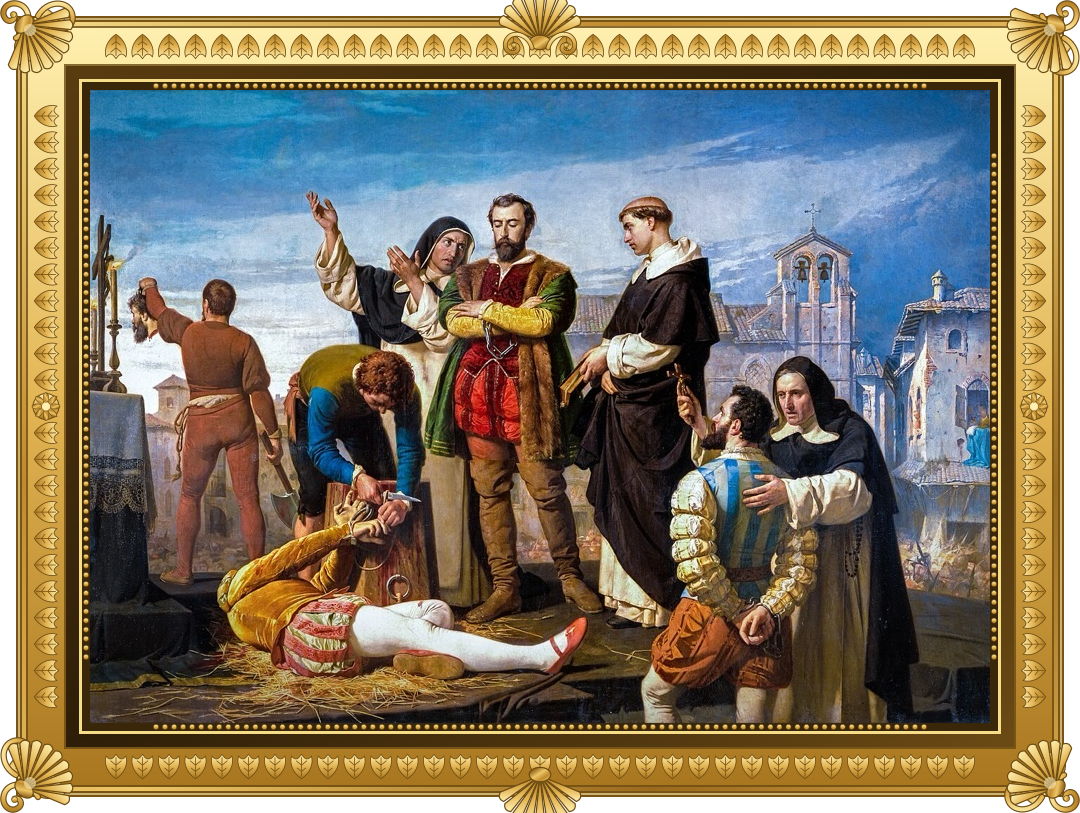
There is a painting in the Prado's collection, hung for years in Spain's Congress of Deputies, that shows three men about to die. Antonio Gisbert painted it in 1860. Juan de Padilla stands at the center, calm, his hand on […]
Three voices. SL speaks for the Social Liberty Foundation. Claude is the AI model that helped draft this piece, given its own lines. 3rd Party is a composite of the country's existing outside parties, fifty years of running […]
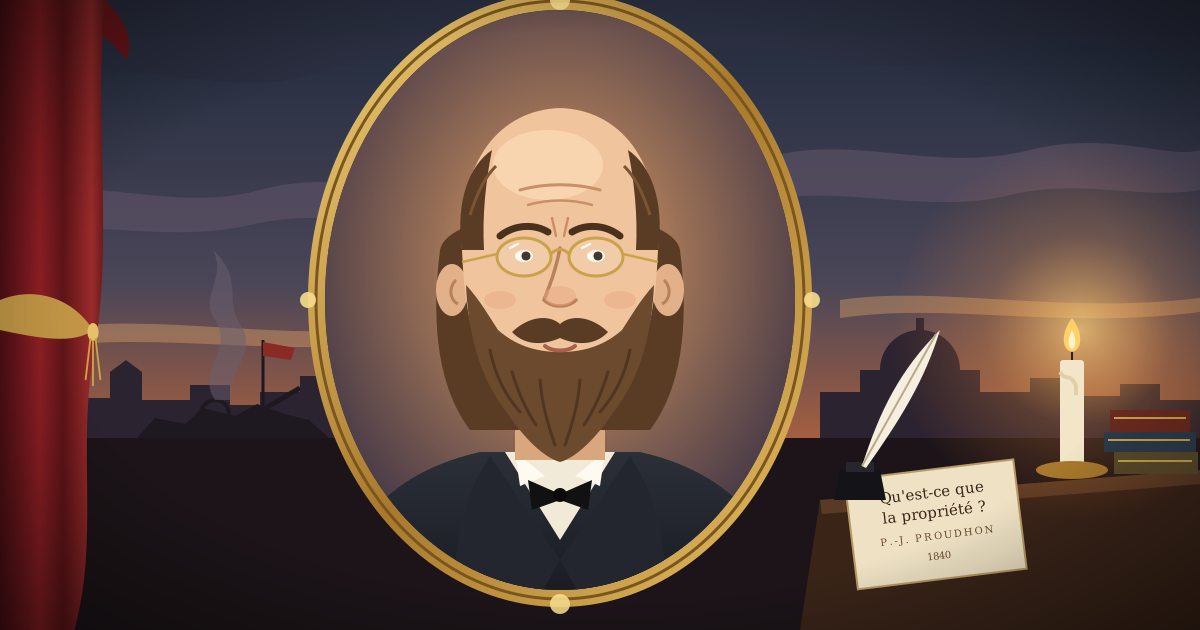
Pierre-Joseph Proudhon gave the nineteenth century one of its most durable lines and then largely vanished from the century that kept quoting it. "Property is theft" outlived the book it came from, the movement it was meant to launch, and, […]
Ask someone why the state runs the schools and the answer arrives instantly, before the question has even finished: of course it does, who else would? That instant, unreflective quality is itself worth noticing. Almost nothing else this large — […]
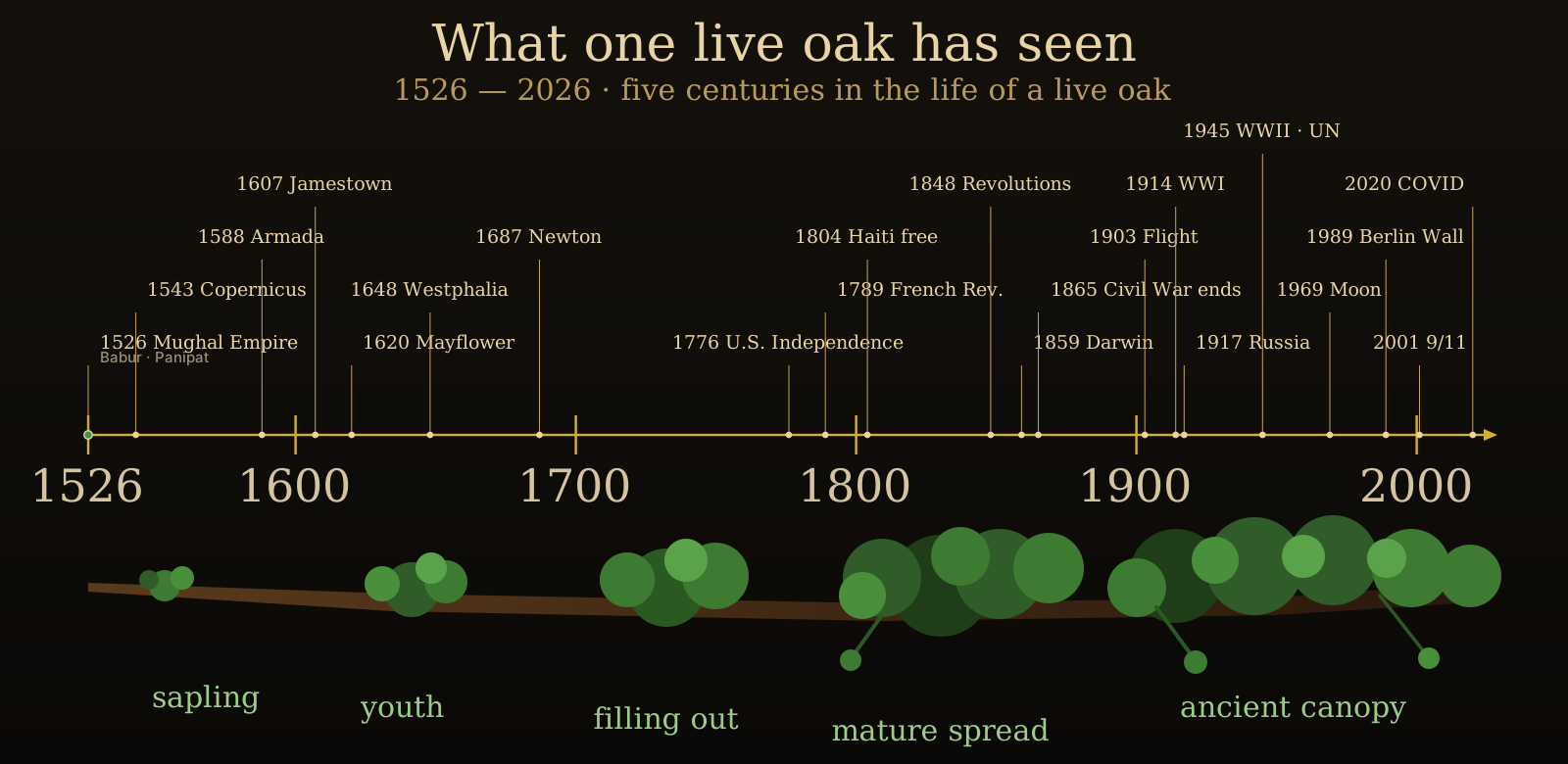
Somewhere in the American South, or on a chaparral hillside in California, there is very likely a live oak — one of a handful of evergreen *Quercus* species that share the name for their wide, low, spreading crowns — that […]
Two things happened to American cities in the same twenty-year stretch, using the same federal money, the same engineering confidence, and in more than one case the same construction crews. One got the streams. The other got the streets. Both […]
Three words carry the entire weight of the American constitutional order, and none of the three does any defining. "We the People" names a sovereign without ever saying who belongs to it — not a list, not a franchise requirement, […]
Our federalism pieces have spent months on a single recurring question: at what altitude should a given decision actually be made. [Splitting the Atom of Sovereignty](/posts/splitting-the-atom-of-sovereignty) described a constitutional design that keeps that question open and arguable rather than settling […]
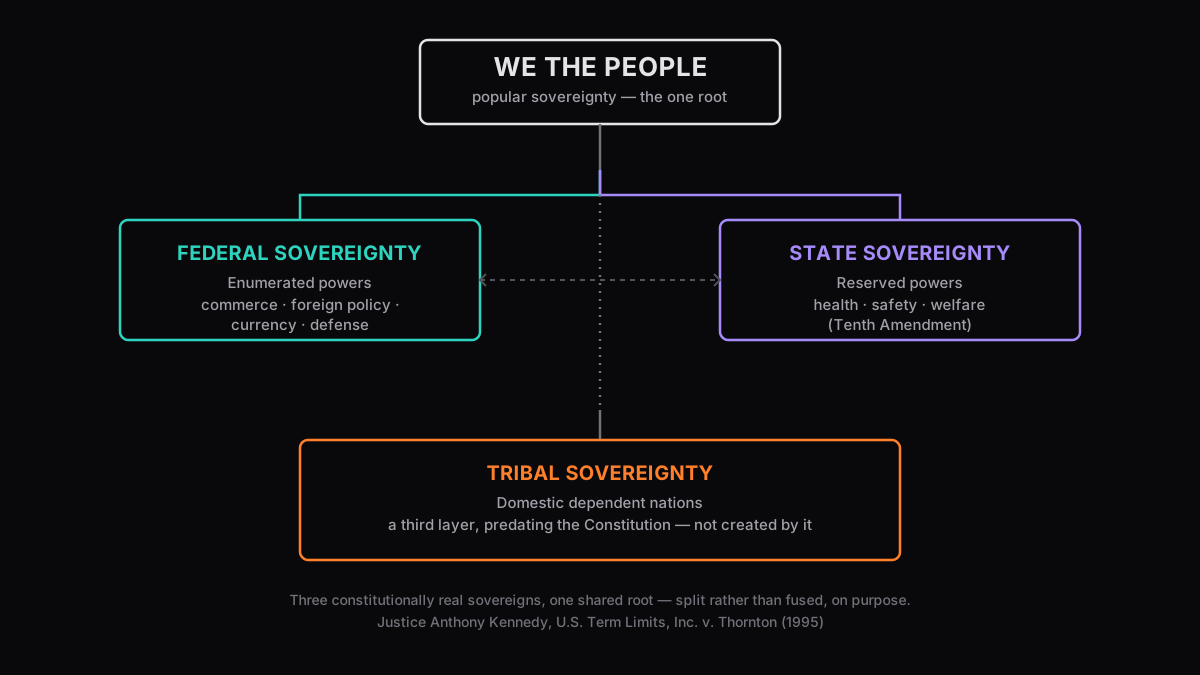
[Splitting the Atom of Sovereignty](/posts/splitting-the-atom-of-sovereignty) described the American design as three layers of political authority, all tracing back to one root: the people themselves. [We the People](/posts/we-the-people) then asked what that root actually is — who counts as "We," and […]
Most of what a government is, historically, is one thing: a single will at the top, however that will gets chosen or replaced. A king, a parliament, a politburo — the label changes, but sovereignty itself stays whole, a single […]
Ask why a given American city sorts land into "single-family residential," "commercial," and "industrial," and the honest answer is rarely a planning theory. It's history, mostly forgotten, doing the work a theory is usually credited with. […]
Before the parties, before the manifestos, before anyone was arrested for it, most modern revolutionary movements began the same way: a handful of people meeting to read something together. Russians called the form the *kruzhok* — literally "little circle" — […]
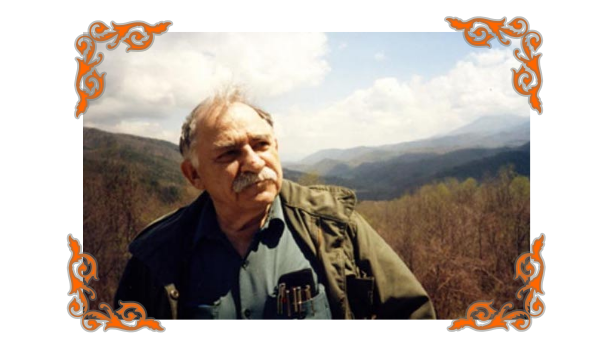
adapted from Murray Bookchin — Social Anarchism or Lifestyle Anarchism: An Unbridgeable Chasm Ideological individualism did not fade away altogether during this 19th century period of sweeping social unrest. A sizable reservoir of individualist anarchists, especially in the Anglo-American world, were nourished by the ideas of John Locke and John Stuart Mill, as well as […]
 Social Liberty